

"Institutional capital flows meeting real utility, especially tokenized real-world assets and on-chain trading infrastructure, accelerated by ETF inflows and the rise of AI agents."
"Institutional capital flows meeting real utility, especially tokenized real-world assets and on-chain trading infrastructure, accelerated by ETF inflows and the rise of AI agents."
"Institutional capital flows meeting real utility, especially tokenized real-world assets and on-chain trading infrastructure, accelerated by ETF inflows and the rise of AI agents."



Q. What do you think matters most in crypto right now, and what makes you say that?
Institutional capital flows meeting real utility, especially tokenized real-world assets and on-chain trading infrastructure, accelerated by ETF inflows and the rise of AI agents.
ETFs brought tens of billions in serious money that demands transparency and yield. Hyperliquid proved the power of this shift. As a fully on-chain perpetuals exchange on its own high-performance chain, it delivered CEX-level speed and liquidity, processing over $2.6 trillion in volume in 2025 and consistently leading decentralized perps with billions in daily trading. Layer on Elon’s upcoming X Money platform, with its payment licenses and crypto integration, plus autonomous AI agents that will need instant, programmable money to operate, and you see why on-chain capital markets are no longer optional. Everything else is secondary.
Q. When you look at the next 2–3 years, what changes do you expect, technically, economically, or socially?
Technically, we’ll see much simpler user experiences through account abstraction and intent-based systems, combined with powerful AI agents that can act autonomously. These agents will negotiate, trade, and settle deals on their own.
Economically, X Money will roll out widely in 2026–2027, stablecoins will exceed $1 trillion, and tokenized real-world assets will bring trillions more on-chain. Hyperliquid-style on-chain trading will keep pulling volume away from centralized exchanges. Most importantly, a parallel machine economy will emerge where AI agents interact constantly, and they can only efficiently barter using crypto and stablecoins.
Socially, crypto moves deeper into mainstream wealth management. More institutions, everyday investors, and even their AI tools will participate as regulation clarifies and user experience improves. The four-year hype cycle will weaken as steady institutional and agent-driven flows take over.

Q. What’s a belief you’ve changed your mind about in crypto, and what caused the shift?
I used to believe pure decentralization with no compromises was the only path forward, the classic 2011 mindset. Any regulatory or custodial element felt like giving up.
That changed after watching repeated exploits hurt regular users and seeing how ETFs and institutional players required proper legal rails to bring real money in. Hyperliquid’s success as a high-performance decentralized platform also showed that smart hybrids can deliver both scale and security. The shift was driven by results. Compliant, user-friendly infrastructure has brought far more capital and adoption than ideology alone ever could.
Q. Where do you see the biggest gap between what builders are creating and what users actually need?
Builders keep launching advanced protocols, new trading tools, and complex DeFi mechanics. What most users, both humans and AI agents, actually need is much simpler: reliable, easy-to-use systems with strong risk protection and seamless integration into everyday finance.
People want “set it and forget it” tools that handle taxes, compliance, and portfolio management automatically. Agents need fast, low-friction payment rails they can trust without constant oversight. The gap between impressive tech demos and practical, trustworthy products remains the biggest challenge in turning crypto into real wealth management infrastructure.
_2048x1365.jpg)
Q. If you could redesign one part of today’s crypto ecosystem from scratch, what would you change and why?
I’d completely rebuild the wallet and account experience.
The old seed-phrase model creates too much risk and friction for normal users. A modern version should feel invisible: secure logins, easy recovery, and built-in protection, while being ready for AI agents to use safely with proper permissions.
This matters because every other breakthrough, ETFs, Hyperliquid’s trading volume, X Money, tokenized assets, and agent economies, depends on people and machines actually being able to use the system without fear or complexity. Make the entry point simple and secure, and the whole industry scales dramatically.
_2048x1365.jpg)
About Mauricio
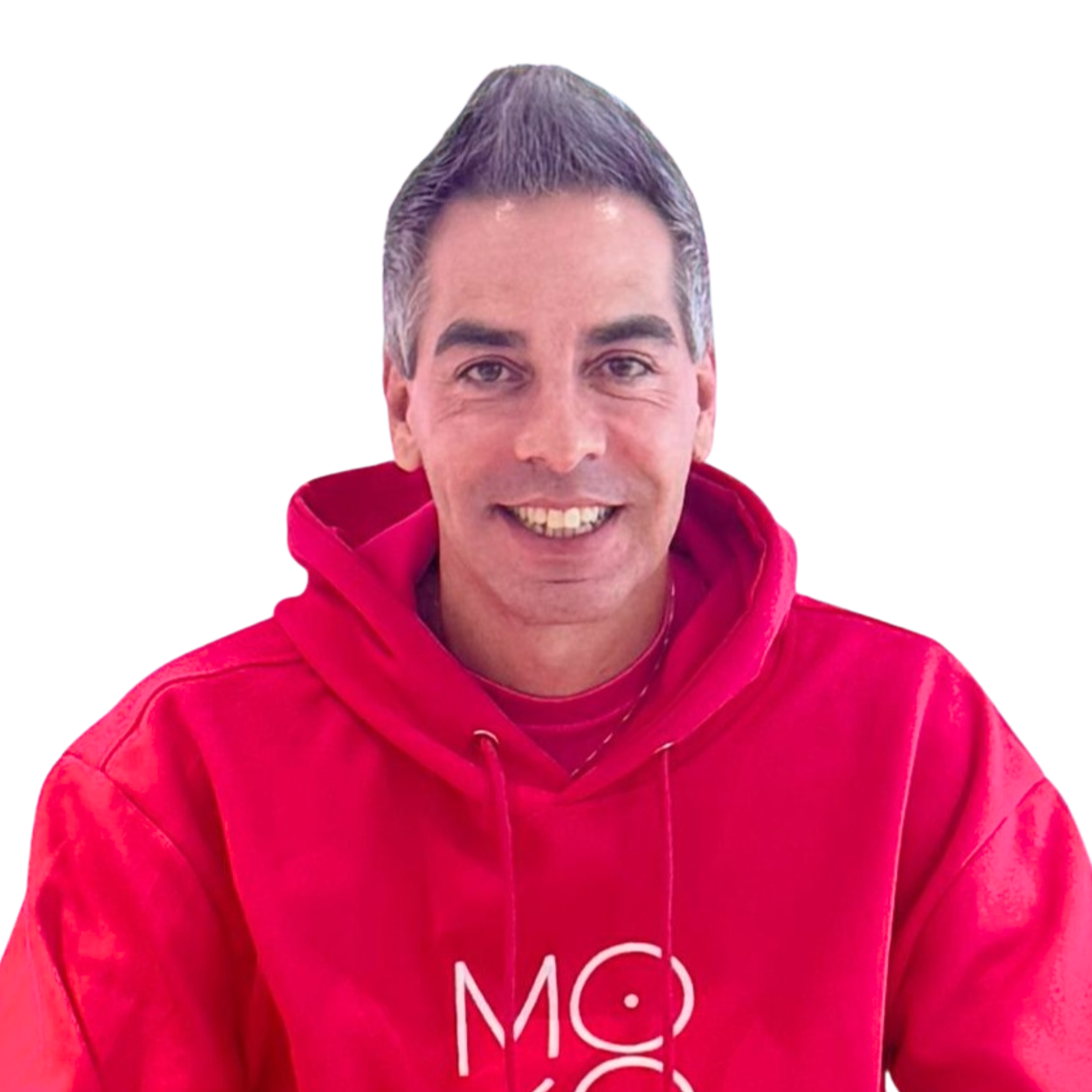
Mauricio is the founder & CEO of MOIQ Capital. Disrupting wealth management by deploying AI that supercharges a human-centric ecosystem, amplifying the lives of next-gen UHNWIs and redefining what wealth truly means
Q. What do you think matters most in crypto right now, and what makes you say that?
Institutional capital flows meeting real utility, especially tokenized real-world assets and on-chain trading infrastructure, accelerated by ETF inflows and the rise of AI agents.
ETFs brought tens of billions in serious money that demands transparency and yield. Hyperliquid proved the power of this shift. As a fully on-chain perpetuals exchange on its own high-performance chain, it delivered CEX-level speed and liquidity, processing over $2.6 trillion in volume in 2025 and consistently leading decentralized perps with billions in daily trading. Layer on Elon’s upcoming X Money platform, with its payment licenses and crypto integration, plus autonomous AI agents that will need instant, programmable money to operate, and you see why on-chain capital markets are no longer optional. Everything else is secondary.
Q. When you look at the next 2–3 years, what changes do you expect, technically, economically, or socially?
Technically, we’ll see much simpler user experiences through account abstraction and intent-based systems, combined with powerful AI agents that can act autonomously. These agents will negotiate, trade, and settle deals on their own.
Economically, X Money will roll out widely in 2026–2027, stablecoins will exceed $1 trillion, and tokenized real-world assets will bring trillions more on-chain. Hyperliquid-style on-chain trading will keep pulling volume away from centralized exchanges. Most importantly, a parallel machine economy will emerge where AI agents interact constantly, and they can only efficiently barter using crypto and stablecoins.
Socially, crypto moves deeper into mainstream wealth management. More institutions, everyday investors, and even their AI tools will participate as regulation clarifies and user experience improves. The four-year hype cycle will weaken as steady institutional and agent-driven flows take over.
Q. What’s a belief you’ve changed your mind about in crypto, and what caused the shift?
I used to believe pure decentralization with no compromises was the only path forward, the classic 2011 mindset. Any regulatory or custodial element felt like giving up.
That changed after watching repeated exploits hurt regular users and seeing how ETFs and institutional players required proper legal rails to bring real money in. Hyperliquid’s success as a high-performance decentralized platform also showed that smart hybrids can deliver both scale and security. The shift was driven by results. Compliant, user-friendly infrastructure has brought far more capital and adoption than ideology alone ever could.
Q. Where do you see the biggest gap between what builders are creating and what users actually need?
Builders keep launching advanced protocols, new trading tools, and complex DeFi mechanics. What most users, both humans and AI agents, actually need is much simpler: reliable, easy-to-use systems with strong risk protection and seamless integration into everyday finance.
People want “set it and forget it” tools that handle taxes, compliance, and portfolio management automatically. Agents need fast, low-friction payment rails they can trust without constant oversight. The gap between impressive tech demos and practical, trustworthy products remains the biggest challenge in turning crypto into real wealth management infrastructure.
Q. If you could redesign one part of today’s crypto ecosystem from scratch, what would you change and why?
I’d completely rebuild the wallet and account experience.
The old seed-phrase model creates too much risk and friction for normal users. A modern version should feel invisible: secure logins, easy recovery, and built-in protection, while being ready for AI agents to use safely with proper permissions.
This matters because every other breakthrough, ETFs, Hyperliquid’s trading volume, X Money, tokenized assets, and agent economies, depends on people and machines actually being able to use the system without fear or complexity. Make the entry point simple and secure, and the whole industry scales dramatically.
About Mauricio
Mauricio is the founder & CEO of MOIQ Capital. Disrupting wealth management by deploying AI that supercharges a human-centric ecosystem, amplifying the lives of next-gen UHNWIs and redefining what wealth truly means
Q. What do you think matters most in crypto right now, and what makes you say that?
Institutional capital flows meeting real utility, especially tokenized real-world assets and on-chain trading infrastructure, accelerated by ETF inflows and the rise of AI agents.
ETFs brought tens of billions in serious money that demands transparency and yield. Hyperliquid proved the power of this shift. As a fully on-chain perpetuals exchange on its own high-performance chain, it delivered CEX-level speed and liquidity, processing over $2.6 trillion in volume in 2025 and consistently leading decentralized perps with billions in daily trading. Layer on Elon’s upcoming X Money platform, with its payment licenses and crypto integration, plus autonomous AI agents that will need instant, programmable money to operate, and you see why on-chain capital markets are no longer optional. Everything else is secondary.
Q. When you look at the next 2–3 years, what changes do you expect, technically, economically, or socially?
Technically, we’ll see much simpler user experiences through account abstraction and intent-based systems, combined with powerful AI agents that can act autonomously. These agents will negotiate, trade, and settle deals on their own.
Economically, X Money will roll out widely in 2026–2027, stablecoins will exceed $1 trillion, and tokenized real-world assets will bring trillions more on-chain. Hyperliquid-style on-chain trading will keep pulling volume away from centralized exchanges. Most importantly, a parallel machine economy will emerge where AI agents interact constantly, and they can only efficiently barter using crypto and stablecoins.
Socially, crypto moves deeper into mainstream wealth management. More institutions, everyday investors, and even their AI tools will participate as regulation clarifies and user experience improves. The four-year hype cycle will weaken as steady institutional and agent-driven flows take over.
Q. What’s a belief you’ve changed your mind about in crypto, and what caused the shift?
I used to believe pure decentralization with no compromises was the only path forward, the classic 2011 mindset. Any regulatory or custodial element felt like giving up.
That changed after watching repeated exploits hurt regular users and seeing how ETFs and institutional players required proper legal rails to bring real money in. Hyperliquid’s success as a high-performance decentralized platform also showed that smart hybrids can deliver both scale and security. The shift was driven by results. Compliant, user-friendly infrastructure has brought far more capital and adoption than ideology alone ever could.
Q. Where do you see the biggest gap between what builders are creating and what users actually need?
Builders keep launching advanced protocols, new trading tools, and complex DeFi mechanics. What most users, both humans and AI agents, actually need is much simpler: reliable, easy-to-use systems with strong risk protection and seamless integration into everyday finance.
People want “set it and forget it” tools that handle taxes, compliance, and portfolio management automatically. Agents need fast, low-friction payment rails they can trust without constant oversight. The gap between impressive tech demos and practical, trustworthy products remains the biggest challenge in turning crypto into real wealth management infrastructure.
Q. If you could redesign one part of today’s crypto ecosystem from scratch, what would you change and why?
I’d completely rebuild the wallet and account experience.
The old seed-phrase model creates too much risk and friction for normal users. A modern version should feel invisible: secure logins, easy recovery, and built-in protection, while being ready for AI agents to use safely with proper permissions.
This matters because every other breakthrough, ETFs, Hyperliquid’s trading volume, X Money, tokenized assets, and agent economies, depends on people and machines actually being able to use the system without fear or complexity. Make the entry point simple and secure, and the whole industry scales dramatically.
About Mauricio
Mauricio is the founder & CEO of MOIQ Capital. Disrupting wealth management by deploying AI that supercharges a human-centric ecosystem, amplifying the lives of next-gen UHNWIs and redefining what wealth truly means
Contributors

.png)

.png)


Articles