

"The biggest bottleneck in adoption isn’t block speed. It’s trust and settlement between traditional finance and digital assets. Fix that boundary, and the rest scales naturally."
"The biggest bottleneck in adoption isn’t block speed. It’s trust and settlement between traditional finance and digital assets. Fix that boundary, and the rest scales naturally."
"The biggest bottleneck in adoption isn’t block speed. It’s trust and settlement between traditional finance and digital assets. Fix that boundary, and the rest scales naturally."



Q. What do you think matters most in crypto right now, and what makes you say that?
What matters most right now is whether crypto can integrate with the real financial system without losing its core advantages.
For years, the industry focused on innovation speed - new chains, new tokens, new yield models. But the real question now is different: Can this infrastructure handle regulated capital at scale?
From what I’ve seen working with banks and regulated institutions, capital doesn’t care about ideology. It cares about reliability, compliance clarity, operational resilience, and predictable risk. If those aren’t solved, adoption stalls.
The most important developments today aren’t higher TPS numbers. They’re:
- Regulated custody frameworks
- Embedded AML/KYT tooling
- Real-time settlement between fiat and digital assets
- Tokenization structures that align with securities law
Crypto is no longer proving it can exist. It’s proving it can integrate. That’s a much harder test and a much more meaningful one.
Q. When you look at the next 2–3 years, what changes do you expect - technically, economically, or socially?
Technically, crypto will become less visible.
The most successful products won’t look like “crypto products.” Wallets will abstract complexity. Gas will be hidden. Key management will become hybrid. Users won’t need to understand block explorers to send value.
Economically, I expect tokenization and structured digital asset products to become mainstream within institutional circles. Not in a speculative way - in a revenue-generating way. Treasuries, private credit, and structured yield products will be wrapped in regulated vehicles and distributed through familiar channels.
Banks won’t replace DeFi. They’ll package it differently.
Socially, I think the narrative will mature. The next growth phase won’t be driven by speculation alone. It will be driven by infrastructure e.g., cross-border settlement, treasury optimization, programmable payouts, and capital efficiency.
The loudest parts of crypto won’t define the next cycle. The most reliable parts will.
.jpg)
Q. What’s a belief you’ve changed your mind about in crypto, and what caused the shift?
Earlier in my career, I believed decentralization was the end goal.
Now I see it differently.
Decentralization is a design tool, not a religion. In practice, capital allocators and institutions need governance clarity, accountability, and defined risk boundaries. Completely structureless systems struggle to scale regulated money.
That shift happened when I started working directly with regulated entities. I saw how boards think. I saw how risk committees operate. I saw how compliance teams evaluate infrastructure.
It changed my perspective. The future isn’t fully decentralized or fully centralized. It’s programmable systems with defined accountability layers. That balance is what unlocks serious capital.
Q. Where do you see the biggest gap between what builders are creating and what users actually need?
Builders are incredibly good at solving technical problems.
Users are mostly concerned with operational certainty.
There’s a gap there.
Many products optimize for protocol elegance, composability, token mechanics, and yield efficiency. But users, especially institutions, want the following:
- Clear risk visibility
- Legal certainty
- Stable cost structures
- Human accountability when something breaks
Even retail users don’t wake up thinking about decentralization theory. They want speed, safety, and simplicity.
The industry sometimes confuses sophistication with usefulness. The products that will win over the next few years are the ones that reduce cognitive load, not increase it.
Q. If you could redesign one part of today’s crypto ecosystem from scratch, what would you change and why?
I would redesign the fiat-to-crypto boundary.
That transition layer is still fragmented, jurisdictionally inconsistent, and operationally inefficient. It creates friction for users and compliance strain for institutions.
If I could rebuild it, I would focus on:
- Standardized compliance interfaces across jurisdictions
- Direct bank-integrated digital asset settlement rails
- Real-time fiat clearing aligned with blockchain finality
- Custody and identity systems that are modular but interoperable
The biggest bottleneck in adoption isn’t block speed. It’s trust and settlement between traditional finance and digital assets. Fix that boundary, and the rest scales naturally.
About AbuBakar Mujahid
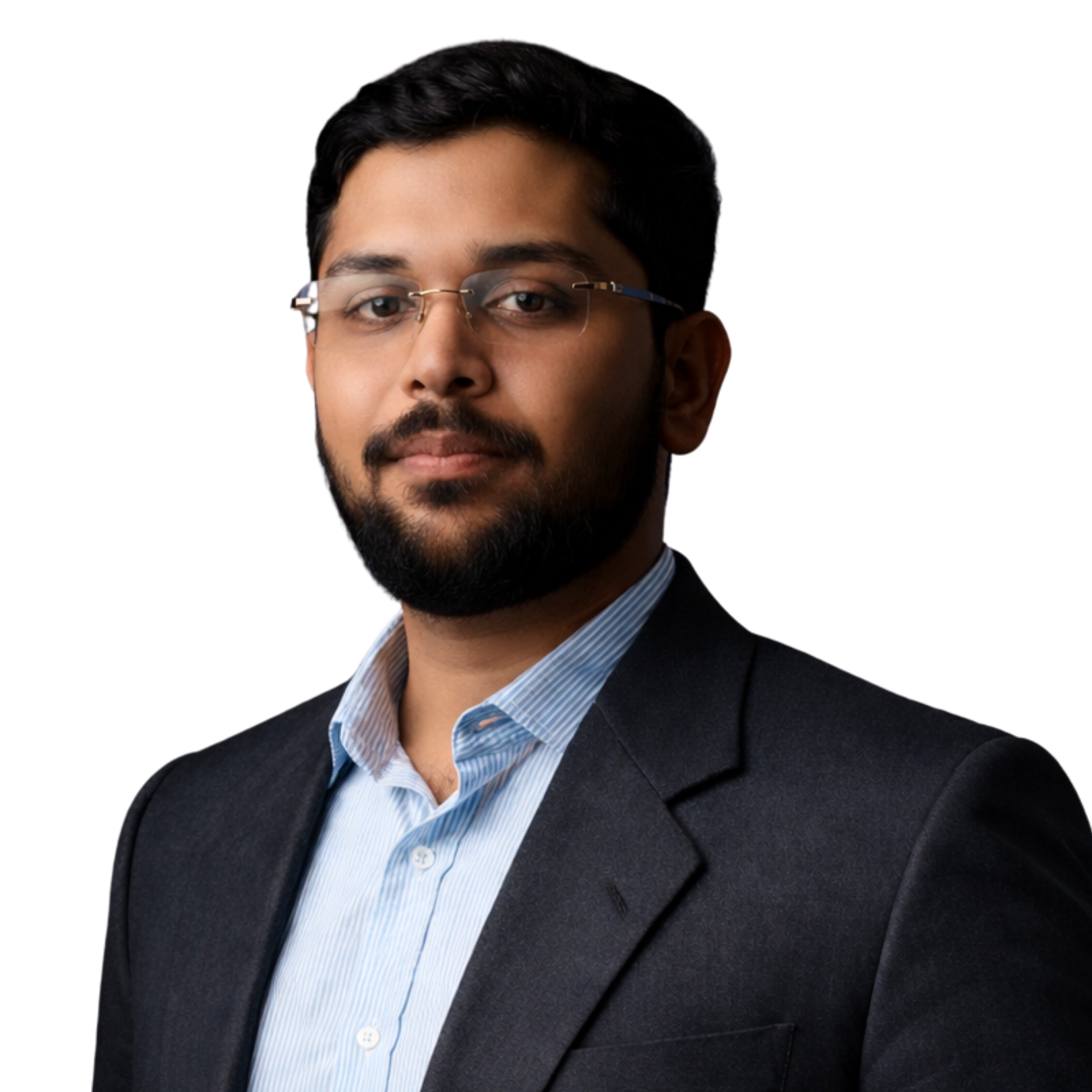
AbuBakar is an AVP of Digital Assets & Cybersecurity at RAK Bank with over 10 years of experience across banking, fintech, and blockchain. He specializes in digital asset strategy, blockchain product development, on-chain risk monitoring, and cybersecurity within evolving regulatory environments. AbuBakar is known for driving secure, scalable innovation through cross-functional leadership and data-driven decision-making.
Q. What do you think matters most in crypto right now, and what makes you say that?
What matters most right now is whether crypto can integrate with the real financial system without losing its core advantages.
For years, the industry focused on innovation speed - new chains, new tokens, new yield models. But the real question now is different: Can this infrastructure handle regulated capital at scale?
From what I’ve seen working with banks and regulated institutions, capital doesn’t care about ideology. It cares about reliability, compliance clarity, operational resilience, and predictable risk. If those aren’t solved, adoption stalls.
The most important developments today aren’t higher TPS numbers. They’re:
- Regulated custody frameworks
- Embedded AML/KYT tooling
- Real-time settlement between fiat and digital assets
- Tokenization structures that align with securities law
Crypto is no longer proving it can exist. It’s proving it can integrate. That’s a much harder test and a much more meaningful one.
Q. When you look at the next 2–3 years, what changes do you expect - technically, economically, or socially?
Technically, crypto will become less visible.
The most successful products won’t look like “crypto products.” Wallets will abstract complexity. Gas will be hidden. Key management will become hybrid. Users won’t need to understand block explorers to send value.
Economically, I expect tokenization and structured digital asset products to become mainstream within institutional circles. Not in a speculative way - in a revenue-generating way. Treasuries, private credit, and structured yield products will be wrapped in regulated vehicles and distributed through familiar channels.
Banks won’t replace DeFi. They’ll package it differently.
Socially, I think the narrative will mature. The next growth phase won’t be driven by speculation alone. It will be driven by infrastructure e.g., cross-border settlement, treasury optimization, programmable payouts, and capital efficiency.
The loudest parts of crypto won’t define the next cycle. The most reliable parts will.
Q. What’s a belief you’ve changed your mind about in crypto, and what caused the shift?
Earlier in my career, I believed decentralization was the end goal.
Now I see it differently.
Decentralization is a design tool, not a religion. In practice, capital allocators and institutions need governance clarity, accountability, and defined risk boundaries. Completely structureless systems struggle to scale regulated money.
That shift happened when I started working directly with regulated entities. I saw how boards think. I saw how risk committees operate. I saw how compliance teams evaluate infrastructure.
It changed my perspective. The future isn’t fully decentralized or fully centralized. It’s programmable systems with defined accountability layers. That balance is what unlocks serious capital.
Q. Where do you see the biggest gap between what builders are creating and what users actually need?
Builders are incredibly good at solving technical problems.
Users are mostly concerned with operational certainty.
There’s a gap there.
Many products optimize for protocol elegance, composability, token mechanics, and yield efficiency. But users, especially institutions, want the following:
- Clear risk visibility
- Legal certainty
- Stable cost structures
- Human accountability when something breaks
Even retail users don’t wake up thinking about decentralization theory. They want speed, safety, and simplicity.
The industry sometimes confuses sophistication with usefulness. The products that will win over the next few years are the ones that reduce cognitive load, not increase it.
Q. If you could redesign one part of today’s crypto ecosystem from scratch, what would you change and why?
I would redesign the fiat-to-crypto boundary.
That transition layer is still fragmented, jurisdictionally inconsistent, and operationally inefficient. It creates friction for users and compliance strain for institutions.
If I could rebuild it, I would focus on:
- Standardized compliance interfaces across jurisdictions
- Direct bank-integrated digital asset settlement rails
- Real-time fiat clearing aligned with blockchain finality
- Custody and identity systems that are modular but interoperable
The biggest bottleneck in adoption isn’t block speed. It’s trust and settlement between traditional finance and digital assets. Fix that boundary, and the rest scales naturally.
About AbuBakar Mujahid
AbuBakar is an AVP of Digital Assets & Cybersecurity at RAK Bank with over 10 years of experience across banking, fintech, and blockchain. He specializes in digital asset strategy, blockchain product development, on-chain risk monitoring, and cybersecurity within evolving regulatory environments. AbuBakar is known for driving secure, scalable innovation through cross-functional leadership and data-driven decision-making.
Q. What do you think matters most in crypto right now, and what makes you say that?
What matters most right now is whether crypto can integrate with the real financial system without losing its core advantages.
For years, the industry focused on innovation speed - new chains, new tokens, new yield models. But the real question now is different: Can this infrastructure handle regulated capital at scale?
From what I’ve seen working with banks and regulated institutions, capital doesn’t care about ideology. It cares about reliability, compliance clarity, operational resilience, and predictable risk. If those aren’t solved, adoption stalls.
The most important developments today aren’t higher TPS numbers. They’re:
- Regulated custody frameworks
- Embedded AML/KYT tooling
- Real-time settlement between fiat and digital assets
- Tokenization structures that align with securities law
Crypto is no longer proving it can exist. It’s proving it can integrate. That’s a much harder test and a much more meaningful one.
Q. When you look at the next 2–3 years, what changes do you expect - technically, economically, or socially?
Technically, crypto will become less visible.
The most successful products won’t look like “crypto products.” Wallets will abstract complexity. Gas will be hidden. Key management will become hybrid. Users won’t need to understand block explorers to send value.
Economically, I expect tokenization and structured digital asset products to become mainstream within institutional circles. Not in a speculative way - in a revenue-generating way. Treasuries, private credit, and structured yield products will be wrapped in regulated vehicles and distributed through familiar channels.
Banks won’t replace DeFi. They’ll package it differently.
Socially, I think the narrative will mature. The next growth phase won’t be driven by speculation alone. It will be driven by infrastructure e.g., cross-border settlement, treasury optimization, programmable payouts, and capital efficiency.
The loudest parts of crypto won’t define the next cycle. The most reliable parts will.
Q. What’s a belief you’ve changed your mind about in crypto, and what caused the shift?
Earlier in my career, I believed decentralization was the end goal.
Now I see it differently.
Decentralization is a design tool, not a religion. In practice, capital allocators and institutions need governance clarity, accountability, and defined risk boundaries. Completely structureless systems struggle to scale regulated money.
That shift happened when I started working directly with regulated entities. I saw how boards think. I saw how risk committees operate. I saw how compliance teams evaluate infrastructure.
It changed my perspective. The future isn’t fully decentralized or fully centralized. It’s programmable systems with defined accountability layers. That balance is what unlocks serious capital.
Q. Where do you see the biggest gap between what builders are creating and what users actually need?
Builders are incredibly good at solving technical problems.
Users are mostly concerned with operational certainty.
There’s a gap there.
Many products optimize for protocol elegance, composability, token mechanics, and yield efficiency. But users, especially institutions, want the following:
- Clear risk visibility
- Legal certainty
- Stable cost structures
- Human accountability when something breaks
Even retail users don’t wake up thinking about decentralization theory. They want speed, safety, and simplicity.
The industry sometimes confuses sophistication with usefulness. The products that will win over the next few years are the ones that reduce cognitive load, not increase it.
Q. If you could redesign one part of today’s crypto ecosystem from scratch, what would you change and why?
I would redesign the fiat-to-crypto boundary.
That transition layer is still fragmented, jurisdictionally inconsistent, and operationally inefficient. It creates friction for users and compliance strain for institutions.
If I could rebuild it, I would focus on:
- Standardized compliance interfaces across jurisdictions
- Direct bank-integrated digital asset settlement rails
- Real-time fiat clearing aligned with blockchain finality
- Custody and identity systems that are modular but interoperable
The biggest bottleneck in adoption isn’t block speed. It’s trust and settlement between traditional finance and digital assets. Fix that boundary, and the rest scales naturally.
About AbuBakar Mujahid
AbuBakar is an AVP of Digital Assets & Cybersecurity at RAK Bank with over 10 years of experience across banking, fintech, and blockchain. He specializes in digital asset strategy, blockchain product development, on-chain risk monitoring, and cybersecurity within evolving regulatory environments. AbuBakar is known for driving secure, scalable innovation through cross-functional leadership and data-driven decision-making.
Contributors

.png)

.png)


Articles