
Inside SuperWorld’s Vision for the Digital Layer of Reality: Q&A with Hrish Lotlikar
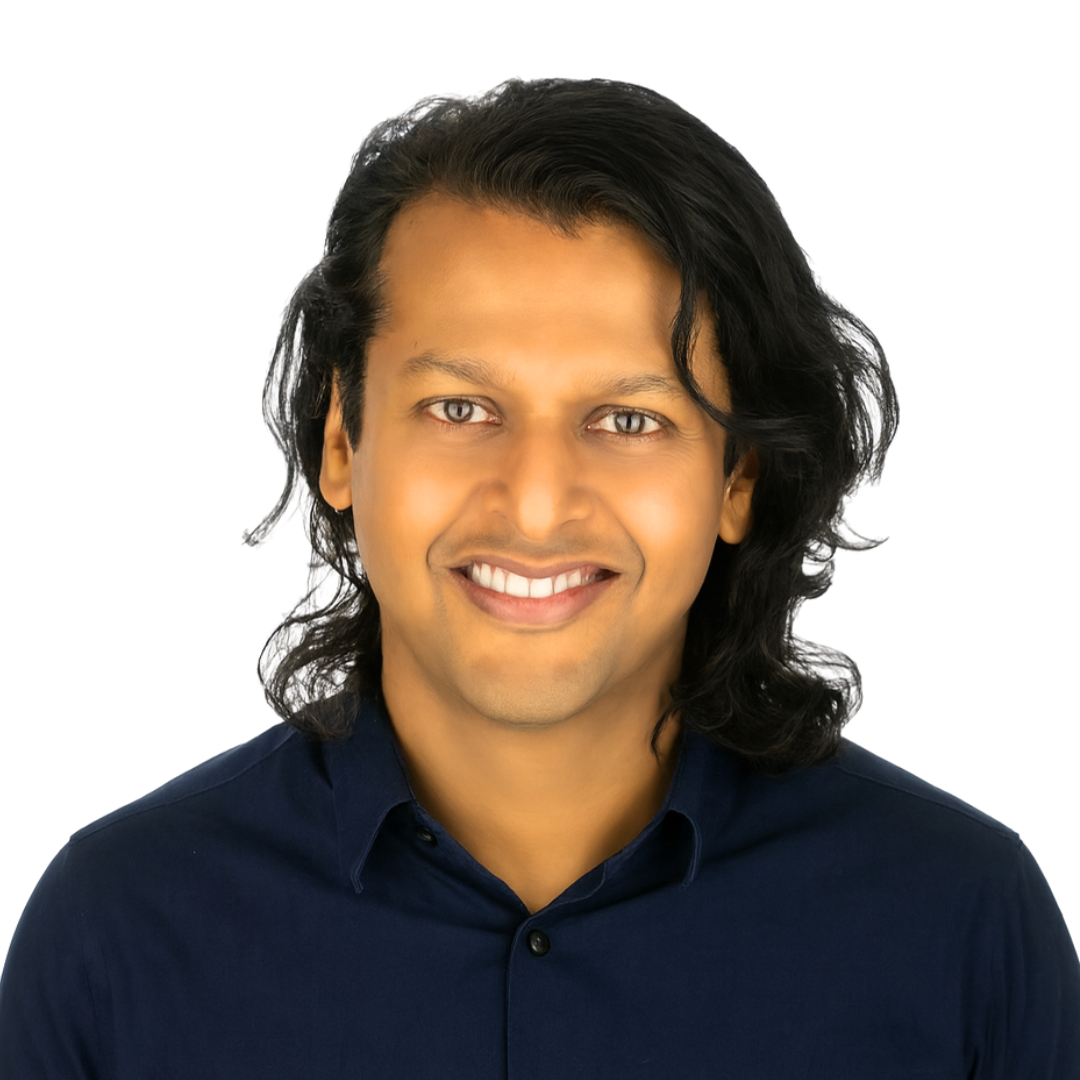


"We’re building toward a future where technology helps humanity thrive — not escape reality, but enhance it.”
"We’re building toward a future where technology helps humanity thrive — not escape reality, but enhance it.”
"We’re building toward a future where technology helps humanity thrive — not escape reality, but enhance it.”


Q: SuperWorld envisions a world where the digital and physical seamlessly merge. How do you see this convergence transforming how people experience place, culture, and community?
At SuperWorld, we see the world itself becoming a programmable layer of information and interaction - where every physical location has digital value and meaning. By merging the physical and digital, people can share personal stories, cultural heritage, and local experiences directly on the map. This creates a new sense of presence and belonging. Communities can preserve traditions, highlight local businesses, and connect globally through shared interests tied to real places.
Q: You often speak about “phygital ownership.” How does the concept of owning part of the digital world, mapped to real space, change our sense of belonging and identity?
Phygital ownership brings digital empowerment to the physical world. When someone owns virtual real estate in SuperWorld - mapped to a real-world location - they become a stakeholder in that place’s digital future. It’s about identity, connection, and stewardship rather than speculation. People begin to care more deeply about the places they own, share, and interact with - both online and offline - fostering a stronger emotional and cultural bond with the real world.
What makes this even more powerful is that digital interactions can now shape physical outcomes. Through technologies like DePIN (Decentralized Physical Infrastructure Networks), AI, and immersive experiences, ownership in SuperWorld enables users to participate in the evolution of real-world infrastructure, sustainability efforts, and community development.
In fact, we’re pioneering a new category called Real World Locations (RWL) - where immersive tech, Web3, AI, Real World Assets (RWA), and DePIN converge. RWLs represent the next frontier of ownership and engagement, connecting digital actions directly to real-world impact. Beyond digital property - it’s about co-creating the future of Earth itself through technology that enhances how we live, connect, and build together.
Q: As virtual worlds evolve into global ecosystems, what role do you see for digital sovereignty - both for individuals and communities?
“We’re creating the framework for bottom-up, participatory governance.”
Digital sovereignty must start at the individual level. Users should own their data, digital assets, and identities. Communities should govern their local digital ecosystems - from how cultural content is represented to how monetization flows. In SuperWorld, ownership and governance are decentralized and location-based, empowering people to shape their digital presence and earn from activity within their geography.
Q: Could decentralized, creator-led environments like SuperWorld inspire new governance models that differ from those of traditional states?
Yes - SuperWorld acts as a decentralized map of the world where creators become governors of their digital locations. Instead of top-down control, governance emerges from collaboration among stakeholders - creators, businesses, residents, and visitors. It’s a new model of local digital democracy where creativity and participation define how communities thrive.
Beyond this, SuperWorld is enabling individuals and communities to establish sovereign individuality and network states - self-organized, value-driven communities that operate globally while being rooted in real-world locations. These decentralized digital societies can form around shared interests, missions, or identities, and also engage physically through local hubs, events, or projects.
We’re also soon launching our own currency, $SPWR, which will serve as the economic engine powering this new layer of governance. $SPWR will enable our SuperCitizens to execute payments, receive rewards, stake tokens, and participate in decentralized decision-making across the SuperWorld ecosystem.
In this way, SuperWorld becomes an infrastructure for a new kind of global governance - one that merges economics, identity, and community in both digital and physical contexts. It’s a framework for bottom-up, participatory governance where every individual and community can shape the world around them - and share directly in the value they help create.
Q: How might nations or cities use platforms like SuperWorld to extend their digital presence or engage citizens in novel ways?
Cities can use SuperWorld as an immersive civic engagement layer - to promote tourism, events, sustainability initiatives, or cultural preservation. Governments could showcase public projects, host virtual town halls, or integrate digital IDs and smart infrastructure within their mapped geography. This creates transparency, inclusion, and real-time participation.
Q: SuperWorld enables users to monetize digital content linked to real-world locations. How do you envision this redefining the economy of place (from tourism to urban development)?
“Every real-world location becomes an active digital economy.”
Every location on Earth becomes an economic node. A restaurant, museum, or park can host immersive experiences, AR activations, and bookings for real-world services - all visible through SuperWorld. This redefines “place” as an active digital ecosystem where interaction equals economic value. Urban development will increasingly integrate digital layers that drive engagement, commerce, and cultural tourism.
These integrations also extend to physical interactions - where users can engage with content on-site through AR, QR codes, or AI-powered assistants, enabling seamless transitions between digital and physical experiences. Whether it’s booking a hotel, attending an event, or interacting with a local business, every real-world action becomes part of a shared digital economy.
In essence, SuperWorld turns the physical world into an interactive marketplace, where people, places, and technology work together to create economic opportunity, enhance culture, and redefine the value of location itself.
Q: What new kinds of value exchange or commerce could emerge when virtual real estate mirrors real-world geography?
We’re building a new economic layer where ownership and participation are rewarded. Value exchange can come from advertising, bookings, e-commerce, gaming, and creator interactions tied to physical coordinates. Imagine walking through a city where every business, landmark, or event has its own digital economy, owned and monetized by its stakeholders.
Beyond that, businesses and creators can design new forms of phygital commerce, offering both physical experiences and services alongside digital ones. Someone could access an exclusive in-person event, restaurant experience, or local service by being at that physical location, while others participate remotely through live streams, immersive content, or AR/VR interactions.
This creates a powerful new model of hybrid engagement, where local activity generates global participation, and both on-site and online audiences contribute to a shared economy. SuperWorld enables this convergence, transforming every real-world location into a dynamic marketplace of experiences, interactions, and opportunities that extend far beyond geography.
Q: SuperWorld integrates AI and AR in ways that make the physical world programmable. What’s your vision for how AI agents or digital twins will interact with our daily environments?
AI agents will become our personal guides to the real world, curating experiences, recommending places, and enabling us to interact with data and people contextually through AR. Digital twins will mirror and enhance physical locations, helping businesses optimize operations, travelers explore intelligently, and citizens engage meaningfully with their surroundings.
Q: As AR glasses and spatial computing go mainstream, how do you see the map of the world itself becoming a living interface for creativity and connection?
The map will become a shared canvas for expression. Anyone can layer art, education, commerce, or community projects directly onto real places. Imagine looking at your city through glasses and seeing its stories unfold - every wall, park, or monument alive with digital meaning. That’s SuperWorld’s mission: to make the Earth itself interactive, creative, and human-centered.
Q: How do we ensure that the metaverse (and platforms like SuperWorld) remain inclusive and accessible, not just for early adopters but for communities worldwide?
“Accessibility and decentralization are the keys to true inclusion.”
Inclusion starts with accessibility and representation. SuperWorld is designed so anyone, anywhere, can participate, whether they own virtual real estate or not. People can create “Worlds” (their own interactive maps), share recommendations, and earn through real-world interactions. It’s free to access and free to create, ensuring that participation isn’t limited by wealth or geography.
SuperWorld is decentralized by design, meaning ownership, governance, and value creation belong to the community. While virtual real estate ownership allows individuals to become stakeholders in specific locations, benefiting from all digital and physical interactions that occur there, it also creates a partnership model with creators, businesses, and communities. Property owners don’t gate access; instead, they share in the success of the activity and engagement happening in those places.
Our upcoming currency, $SPWR, reinforces this inclusivity by enabling anyone in the world to participate in the global SuperWorld economy. Token holders can use it for payments, rewards, staking, and governance, and benefit from collaboration across the ecosystem, connecting businesses, creators, organizations, and communities worldwide.
Through this structure, SuperWorld ensures that the platform remains open, equitable, and participatory - empowering people everywhere to create, contribute, and thrive across both digital and physical worlds.
Q: As activity in SuperWorld expands (from transactions to social interaction), how do you think about security, accountability, and legal jurisdiction in a decentralized environment?
We’re focused on transparent smart contracts, self-sovereign identity, and ethical data use. Decentralization must come with shared standards and accountability. That’s why we’re working with legal, academic, and government partners to help define frameworks for digital property rights, dispute resolution, and compliance that protect users while preserving innovation.
Q: What excites you most about the next five years in the convergence of AI, Web3, and spatial computing?
“We’re building toward a future where technology helps humanity thrive - not escape reality, but enhance it.”
The convergence will make the real world intelligent. Every place will become discoverable, interactive, and monetizable, forming a decentralized, user-owned layer of the internet over Earth. I’m excited to see how people use these tools to improve lives, empower local economies, and preserve culture. We’re building toward a future where technology helps humanity thrive - not escape reality, but enhance it.
Q: If you could design one policy or public initiative to accelerate responsible innovation in this space, what would it be?
I would create a Global Digital Stewardship Framework - a collaboration among governments, creators, and technologists to establish shared standards for digital property rights, ethical AI, and data ownership. It would ensure that individuals benefit directly from their participation in the digital economy while encouraging open innovation and cross-border collaboration.
This framework would also promote decentralization as a guiding principle, empowering people and communities to control their digital assets, identities, and data without dependence on centralized intermediaries. It would recognize digital assets and digital currencies as legitimate forms of ownership, exchange, and governance, laying the groundwork for a fair and transparent global digital economy.
Ultimately, the goal is to align public policy with technological progress, fostering a world where innovation is both responsible and inclusive, and where every individual has the ability to participate meaningfully in shaping the digital and physical future of our planet.
About Hrish
A lifelong traveler and digital nomad, Hrish Lotlikar has built his career at the intersection of technology, creativity, and global culture. From Kyiv to San Francisco, Miami to Stockholm, his journey across continents shaped the vision behind SuperWorld - a platform reimagining the planet itself as a programmable, interactive layer. Mapped across 68.4 billion virtual plots, SuperWorld transforms every place on Earth into a canvas for creation, connection, and ownership in augmented reality.
Before founding SuperWorld, Hrish co-founded Rogue Initiative Studios, a Hollywood-based immersive entertainment company partnered with director Michael Bay. His career has spanned Wall Street, Silicon Valley, and Hollywood, with previous roles at Eastlabs, Toptal, Spencer Trask Ventures, UBS Investment Bank, and HSBC Securities.
Hrish holds a BA in Political Science from Rice University, and both an MBA and MPH from the University of Illinois at Chicago.
Q: SuperWorld envisions a world where the digital and physical seamlessly merge. How do you see this convergence transforming how people experience place, culture, and community?
At SuperWorld, we see the world itself becoming a programmable layer of information and interaction - where every physical location has digital value and meaning. By merging the physical and digital, people can share personal stories, cultural heritage, and local experiences directly on the map. This creates a new sense of presence and belonging. Communities can preserve traditions, highlight local businesses, and connect globally through shared interests tied to real places.
Q: You often speak about “phygital ownership.” How does the concept of owning part of the digital world, mapped to real space, change our sense of belonging and identity?
Phygital ownership brings digital empowerment to the physical world. When someone owns virtual real estate in SuperWorld - mapped to a real-world location - they become a stakeholder in that place’s digital future. It’s about identity, connection, and stewardship rather than speculation. People begin to care more deeply about the places they own, share, and interact with - both online and offline - fostering a stronger emotional and cultural bond with the real world.
What makes this even more powerful is that digital interactions can now shape physical outcomes. Through technologies like DePIN (Decentralized Physical Infrastructure Networks), AI, and immersive experiences, ownership in SuperWorld enables users to participate in the evolution of real-world infrastructure, sustainability efforts, and community development.
In fact, we’re pioneering a new category called Real World Locations (RWL) - where immersive tech, Web3, AI, Real World Assets (RWA), and DePIN converge. RWLs represent the next frontier of ownership and engagement, connecting digital actions directly to real-world impact. Beyond digital property - it’s about co-creating the future of Earth itself through technology that enhances how we live, connect, and build together.
Q: As virtual worlds evolve into global ecosystems, what role do you see for digital sovereignty - both for individuals and communities?
“We’re creating the framework for bottom-up, participatory governance.”
Digital sovereignty must start at the individual level. Users should own their data, digital assets, and identities. Communities should govern their local digital ecosystems - from how cultural content is represented to how monetization flows. In SuperWorld, ownership and governance are decentralized and location-based, empowering people to shape their digital presence and earn from activity within their geography.
Q: Could decentralized, creator-led environments like SuperWorld inspire new governance models that differ from those of traditional states?
Yes - SuperWorld acts as a decentralized map of the world where creators become governors of their digital locations. Instead of top-down control, governance emerges from collaboration among stakeholders - creators, businesses, residents, and visitors. It’s a new model of local digital democracy where creativity and participation define how communities thrive.
Beyond this, SuperWorld is enabling individuals and communities to establish sovereign individuality and network states - self-organized, value-driven communities that operate globally while being rooted in real-world locations. These decentralized digital societies can form around shared interests, missions, or identities, and also engage physically through local hubs, events, or projects.
We’re also soon launching our own currency, $SPWR, which will serve as the economic engine powering this new layer of governance. $SPWR will enable our SuperCitizens to execute payments, receive rewards, stake tokens, and participate in decentralized decision-making across the SuperWorld ecosystem.
In this way, SuperWorld becomes an infrastructure for a new kind of global governance - one that merges economics, identity, and community in both digital and physical contexts. It’s a framework for bottom-up, participatory governance where every individual and community can shape the world around them - and share directly in the value they help create.
Q: How might nations or cities use platforms like SuperWorld to extend their digital presence or engage citizens in novel ways?
Cities can use SuperWorld as an immersive civic engagement layer - to promote tourism, events, sustainability initiatives, or cultural preservation. Governments could showcase public projects, host virtual town halls, or integrate digital IDs and smart infrastructure within their mapped geography. This creates transparency, inclusion, and real-time participation.
Q: SuperWorld enables users to monetize digital content linked to real-world locations. How do you envision this redefining the economy of place (from tourism to urban development)?
“Every real-world location becomes an active digital economy.”
Every location on Earth becomes an economic node. A restaurant, museum, or park can host immersive experiences, AR activations, and bookings for real-world services - all visible through SuperWorld. This redefines “place” as an active digital ecosystem where interaction equals economic value. Urban development will increasingly integrate digital layers that drive engagement, commerce, and cultural tourism.
These integrations also extend to physical interactions - where users can engage with content on-site through AR, QR codes, or AI-powered assistants, enabling seamless transitions between digital and physical experiences. Whether it’s booking a hotel, attending an event, or interacting with a local business, every real-world action becomes part of a shared digital economy.
In essence, SuperWorld turns the physical world into an interactive marketplace, where people, places, and technology work together to create economic opportunity, enhance culture, and redefine the value of location itself.
Q: What new kinds of value exchange or commerce could emerge when virtual real estate mirrors real-world geography?
We’re building a new economic layer where ownership and participation are rewarded. Value exchange can come from advertising, bookings, e-commerce, gaming, and creator interactions tied to physical coordinates. Imagine walking through a city where every business, landmark, or event has its own digital economy, owned and monetized by its stakeholders.
Beyond that, businesses and creators can design new forms of phygital commerce, offering both physical experiences and services alongside digital ones. Someone could access an exclusive in-person event, restaurant experience, or local service by being at that physical location, while others participate remotely through live streams, immersive content, or AR/VR interactions.
This creates a powerful new model of hybrid engagement, where local activity generates global participation, and both on-site and online audiences contribute to a shared economy. SuperWorld enables this convergence, transforming every real-world location into a dynamic marketplace of experiences, interactions, and opportunities that extend far beyond geography.
Q: SuperWorld integrates AI and AR in ways that make the physical world programmable. What’s your vision for how AI agents or digital twins will interact with our daily environments?
AI agents will become our personal guides to the real world, curating experiences, recommending places, and enabling us to interact with data and people contextually through AR. Digital twins will mirror and enhance physical locations, helping businesses optimize operations, travelers explore intelligently, and citizens engage meaningfully with their surroundings.
Q: As AR glasses and spatial computing go mainstream, how do you see the map of the world itself becoming a living interface for creativity and connection?
The map will become a shared canvas for expression. Anyone can layer art, education, commerce, or community projects directly onto real places. Imagine looking at your city through glasses and seeing its stories unfold - every wall, park, or monument alive with digital meaning. That’s SuperWorld’s mission: to make the Earth itself interactive, creative, and human-centered.
Q: How do we ensure that the metaverse (and platforms like SuperWorld) remain inclusive and accessible, not just for early adopters but for communities worldwide?
“Accessibility and decentralization are the keys to true inclusion.”
Inclusion starts with accessibility and representation. SuperWorld is designed so anyone, anywhere, can participate, whether they own virtual real estate or not. People can create “Worlds” (their own interactive maps), share recommendations, and earn through real-world interactions. It’s free to access and free to create, ensuring that participation isn’t limited by wealth or geography.
SuperWorld is decentralized by design, meaning ownership, governance, and value creation belong to the community. While virtual real estate ownership allows individuals to become stakeholders in specific locations, benefiting from all digital and physical interactions that occur there, it also creates a partnership model with creators, businesses, and communities. Property owners don’t gate access; instead, they share in the success of the activity and engagement happening in those places.
Our upcoming currency, $SPWR, reinforces this inclusivity by enabling anyone in the world to participate in the global SuperWorld economy. Token holders can use it for payments, rewards, staking, and governance, and benefit from collaboration across the ecosystem, connecting businesses, creators, organizations, and communities worldwide.
Through this structure, SuperWorld ensures that the platform remains open, equitable, and participatory - empowering people everywhere to create, contribute, and thrive across both digital and physical worlds.
Q: As activity in SuperWorld expands (from transactions to social interaction), how do you think about security, accountability, and legal jurisdiction in a decentralized environment?
We’re focused on transparent smart contracts, self-sovereign identity, and ethical data use. Decentralization must come with shared standards and accountability. That’s why we’re working with legal, academic, and government partners to help define frameworks for digital property rights, dispute resolution, and compliance that protect users while preserving innovation.
Q: What excites you most about the next five years in the convergence of AI, Web3, and spatial computing?
“We’re building toward a future where technology helps humanity thrive - not escape reality, but enhance it.”
The convergence will make the real world intelligent. Every place will become discoverable, interactive, and monetizable, forming a decentralized, user-owned layer of the internet over Earth. I’m excited to see how people use these tools to improve lives, empower local economies, and preserve culture. We’re building toward a future where technology helps humanity thrive - not escape reality, but enhance it.
Q: If you could design one policy or public initiative to accelerate responsible innovation in this space, what would it be?
I would create a Global Digital Stewardship Framework - a collaboration among governments, creators, and technologists to establish shared standards for digital property rights, ethical AI, and data ownership. It would ensure that individuals benefit directly from their participation in the digital economy while encouraging open innovation and cross-border collaboration.
This framework would also promote decentralization as a guiding principle, empowering people and communities to control their digital assets, identities, and data without dependence on centralized intermediaries. It would recognize digital assets and digital currencies as legitimate forms of ownership, exchange, and governance, laying the groundwork for a fair and transparent global digital economy.
Ultimately, the goal is to align public policy with technological progress, fostering a world where innovation is both responsible and inclusive, and where every individual has the ability to participate meaningfully in shaping the digital and physical future of our planet.
About Hrish
A lifelong traveler and digital nomad, Hrish Lotlikar has built his career at the intersection of technology, creativity, and global culture. From Kyiv to San Francisco, Miami to Stockholm, his journey across continents shaped the vision behind SuperWorld - a platform reimagining the planet itself as a programmable, interactive layer. Mapped across 68.4 billion virtual plots, SuperWorld transforms every place on Earth into a canvas for creation, connection, and ownership in augmented reality.
Before founding SuperWorld, Hrish co-founded Rogue Initiative Studios, a Hollywood-based immersive entertainment company partnered with director Michael Bay. His career has spanned Wall Street, Silicon Valley, and Hollywood, with previous roles at Eastlabs, Toptal, Spencer Trask Ventures, UBS Investment Bank, and HSBC Securities.
Hrish holds a BA in Political Science from Rice University, and both an MBA and MPH from the University of Illinois at Chicago.
Q: SuperWorld envisions a world where the digital and physical seamlessly merge. How do you see this convergence transforming how people experience place, culture, and community?
At SuperWorld, we see the world itself becoming a programmable layer of information and interaction - where every physical location has digital value and meaning. By merging the physical and digital, people can share personal stories, cultural heritage, and local experiences directly on the map. This creates a new sense of presence and belonging. Communities can preserve traditions, highlight local businesses, and connect globally through shared interests tied to real places.
Q: You often speak about “phygital ownership.” How does the concept of owning part of the digital world, mapped to real space, change our sense of belonging and identity?
Phygital ownership brings digital empowerment to the physical world. When someone owns virtual real estate in SuperWorld - mapped to a real-world location - they become a stakeholder in that place’s digital future. It’s about identity, connection, and stewardship rather than speculation. People begin to care more deeply about the places they own, share, and interact with - both online and offline - fostering a stronger emotional and cultural bond with the real world.
What makes this even more powerful is that digital interactions can now shape physical outcomes. Through technologies like DePIN (Decentralized Physical Infrastructure Networks), AI, and immersive experiences, ownership in SuperWorld enables users to participate in the evolution of real-world infrastructure, sustainability efforts, and community development.
In fact, we’re pioneering a new category called Real World Locations (RWL) - where immersive tech, Web3, AI, Real World Assets (RWA), and DePIN converge. RWLs represent the next frontier of ownership and engagement, connecting digital actions directly to real-world impact. Beyond digital property - it’s about co-creating the future of Earth itself through technology that enhances how we live, connect, and build together.
Q: As virtual worlds evolve into global ecosystems, what role do you see for digital sovereignty - both for individuals and communities?
“We’re creating the framework for bottom-up, participatory governance.”
Digital sovereignty must start at the individual level. Users should own their data, digital assets, and identities. Communities should govern their local digital ecosystems - from how cultural content is represented to how monetization flows. In SuperWorld, ownership and governance are decentralized and location-based, empowering people to shape their digital presence and earn from activity within their geography.
Q: Could decentralized, creator-led environments like SuperWorld inspire new governance models that differ from those of traditional states?
Yes - SuperWorld acts as a decentralized map of the world where creators become governors of their digital locations. Instead of top-down control, governance emerges from collaboration among stakeholders - creators, businesses, residents, and visitors. It’s a new model of local digital democracy where creativity and participation define how communities thrive.
Beyond this, SuperWorld is enabling individuals and communities to establish sovereign individuality and network states - self-organized, value-driven communities that operate globally while being rooted in real-world locations. These decentralized digital societies can form around shared interests, missions, or identities, and also engage physically through local hubs, events, or projects.
We’re also soon launching our own currency, $SPWR, which will serve as the economic engine powering this new layer of governance. $SPWR will enable our SuperCitizens to execute payments, receive rewards, stake tokens, and participate in decentralized decision-making across the SuperWorld ecosystem.
In this way, SuperWorld becomes an infrastructure for a new kind of global governance - one that merges economics, identity, and community in both digital and physical contexts. It’s a framework for bottom-up, participatory governance where every individual and community can shape the world around them - and share directly in the value they help create.
Q: How might nations or cities use platforms like SuperWorld to extend their digital presence or engage citizens in novel ways?
Cities can use SuperWorld as an immersive civic engagement layer - to promote tourism, events, sustainability initiatives, or cultural preservation. Governments could showcase public projects, host virtual town halls, or integrate digital IDs and smart infrastructure within their mapped geography. This creates transparency, inclusion, and real-time participation.
Q: SuperWorld enables users to monetize digital content linked to real-world locations. How do you envision this redefining the economy of place (from tourism to urban development)?
“Every real-world location becomes an active digital economy.”
Every location on Earth becomes an economic node. A restaurant, museum, or park can host immersive experiences, AR activations, and bookings for real-world services - all visible through SuperWorld. This redefines “place” as an active digital ecosystem where interaction equals economic value. Urban development will increasingly integrate digital layers that drive engagement, commerce, and cultural tourism.
These integrations also extend to physical interactions - where users can engage with content on-site through AR, QR codes, or AI-powered assistants, enabling seamless transitions between digital and physical experiences. Whether it’s booking a hotel, attending an event, or interacting with a local business, every real-world action becomes part of a shared digital economy.
In essence, SuperWorld turns the physical world into an interactive marketplace, where people, places, and technology work together to create economic opportunity, enhance culture, and redefine the value of location itself.
Q: What new kinds of value exchange or commerce could emerge when virtual real estate mirrors real-world geography?
We’re building a new economic layer where ownership and participation are rewarded. Value exchange can come from advertising, bookings, e-commerce, gaming, and creator interactions tied to physical coordinates. Imagine walking through a city where every business, landmark, or event has its own digital economy, owned and monetized by its stakeholders.
Beyond that, businesses and creators can design new forms of phygital commerce, offering both physical experiences and services alongside digital ones. Someone could access an exclusive in-person event, restaurant experience, or local service by being at that physical location, while others participate remotely through live streams, immersive content, or AR/VR interactions.
This creates a powerful new model of hybrid engagement, where local activity generates global participation, and both on-site and online audiences contribute to a shared economy. SuperWorld enables this convergence, transforming every real-world location into a dynamic marketplace of experiences, interactions, and opportunities that extend far beyond geography.
Q: SuperWorld integrates AI and AR in ways that make the physical world programmable. What’s your vision for how AI agents or digital twins will interact with our daily environments?
AI agents will become our personal guides to the real world, curating experiences, recommending places, and enabling us to interact with data and people contextually through AR. Digital twins will mirror and enhance physical locations, helping businesses optimize operations, travelers explore intelligently, and citizens engage meaningfully with their surroundings.
Q: As AR glasses and spatial computing go mainstream, how do you see the map of the world itself becoming a living interface for creativity and connection?
The map will become a shared canvas for expression. Anyone can layer art, education, commerce, or community projects directly onto real places. Imagine looking at your city through glasses and seeing its stories unfold - every wall, park, or monument alive with digital meaning. That’s SuperWorld’s mission: to make the Earth itself interactive, creative, and human-centered.
Q: How do we ensure that the metaverse (and platforms like SuperWorld) remain inclusive and accessible, not just for early adopters but for communities worldwide?
“Accessibility and decentralization are the keys to true inclusion.”
Inclusion starts with accessibility and representation. SuperWorld is designed so anyone, anywhere, can participate, whether they own virtual real estate or not. People can create “Worlds” (their own interactive maps), share recommendations, and earn through real-world interactions. It’s free to access and free to create, ensuring that participation isn’t limited by wealth or geography.
SuperWorld is decentralized by design, meaning ownership, governance, and value creation belong to the community. While virtual real estate ownership allows individuals to become stakeholders in specific locations, benefiting from all digital and physical interactions that occur there, it also creates a partnership model with creators, businesses, and communities. Property owners don’t gate access; instead, they share in the success of the activity and engagement happening in those places.
Our upcoming currency, $SPWR, reinforces this inclusivity by enabling anyone in the world to participate in the global SuperWorld economy. Token holders can use it for payments, rewards, staking, and governance, and benefit from collaboration across the ecosystem, connecting businesses, creators, organizations, and communities worldwide.
Through this structure, SuperWorld ensures that the platform remains open, equitable, and participatory - empowering people everywhere to create, contribute, and thrive across both digital and physical worlds.
Q: As activity in SuperWorld expands (from transactions to social interaction), how do you think about security, accountability, and legal jurisdiction in a decentralized environment?
We’re focused on transparent smart contracts, self-sovereign identity, and ethical data use. Decentralization must come with shared standards and accountability. That’s why we’re working with legal, academic, and government partners to help define frameworks for digital property rights, dispute resolution, and compliance that protect users while preserving innovation.
Q: What excites you most about the next five years in the convergence of AI, Web3, and spatial computing?
“We’re building toward a future where technology helps humanity thrive - not escape reality, but enhance it.”
The convergence will make the real world intelligent. Every place will become discoverable, interactive, and monetizable, forming a decentralized, user-owned layer of the internet over Earth. I’m excited to see how people use these tools to improve lives, empower local economies, and preserve culture. We’re building toward a future where technology helps humanity thrive - not escape reality, but enhance it.
Q: If you could design one policy or public initiative to accelerate responsible innovation in this space, what would it be?
I would create a Global Digital Stewardship Framework - a collaboration among governments, creators, and technologists to establish shared standards for digital property rights, ethical AI, and data ownership. It would ensure that individuals benefit directly from their participation in the digital economy while encouraging open innovation and cross-border collaboration.
This framework would also promote decentralization as a guiding principle, empowering people and communities to control their digital assets, identities, and data without dependence on centralized intermediaries. It would recognize digital assets and digital currencies as legitimate forms of ownership, exchange, and governance, laying the groundwork for a fair and transparent global digital economy.
Ultimately, the goal is to align public policy with technological progress, fostering a world where innovation is both responsible and inclusive, and where every individual has the ability to participate meaningfully in shaping the digital and physical future of our planet.
About Hrish
A lifelong traveler and digital nomad, Hrish Lotlikar has built his career at the intersection of technology, creativity, and global culture. From Kyiv to San Francisco, Miami to Stockholm, his journey across continents shaped the vision behind SuperWorld - a platform reimagining the planet itself as a programmable, interactive layer. Mapped across 68.4 billion virtual plots, SuperWorld transforms every place on Earth into a canvas for creation, connection, and ownership in augmented reality.
Before founding SuperWorld, Hrish co-founded Rogue Initiative Studios, a Hollywood-based immersive entertainment company partnered with director Michael Bay. His career has spanned Wall Street, Silicon Valley, and Hollywood, with previous roles at Eastlabs, Toptal, Spencer Trask Ventures, UBS Investment Bank, and HSBC Securities.
Hrish holds a BA in Political Science from Rice University, and both an MBA and MPH from the University of Illinois at Chicago.
Contributors

.png)

.png)

Articles